Soure : Netflix
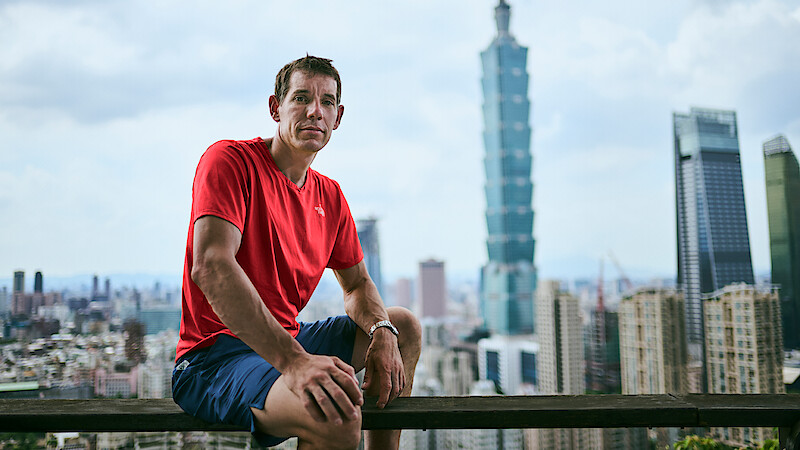
This week, I kept seeing the name Alex Honnold everywhere. Only later did I realise why, his climb of Taipei 101 has now been featured on Netflix. No wonder social media and WhatsApp groups were buzzing. People were talking about his achievement. About how insane it was. About how he might be one of the greatest climbers of our generation. Once I started seeing clips of the climb online, I knew I had to watch it. So after work one evening, I made time, sat down, and pressed play on Netflix. The title: Skyscraper Live 👉 https://www.netflix.com The documentary runs for about 116 minutes, and honestly, it was one of the most intense watches I’ve had in a long time. Every second he scaled the tower, I held my breath. I had to constantly remind myself to breathe. My hands were sweaty, my stomach had butterflies, and I felt dizzy just watching him climb. When he finally reached the top, it felt like I had climbed Taipei 101 too, well not physically, of course, but mentally. And somewhere along the way up that building, a thought kept repeating in my head:
There is so much the hotel industry can learn from Alex Honnold.
So I decided to share 3 lessons hotels can learn from Alex Honnold’s Taipei 101 climb, and how we can apply them in our day-to-day work.
1. Preparation Is Everything and Nothing Is Left to Luck
You may think Alex just wakes up one day and decides to go for it. In fact, it’s the exact opposite. Before any major ascent, he spends months sometimes years preparing. He studies routes obsessively. He analyses surfaces, grip points, wind behaviour, weather conditions, and even how structures respond to heat and pressure. But that’s only 50% of the work. The other half happens in his mind. Alex mentally climbs the entire route over and over again. He visualises every movement, every hand placement, every transition until the climb exists perfectly in his head long before his body ever leaves the ground. By the time he starts climbing, there are no surprises left.
What can we learn from this?
Great hotels don’t rely on luck or assume things will “naturally work out.” They rehearse multiple times to ensure everything flows smoothly.
A few years back, I had the chance to experience this while working at a luxury hotel. We were welcoming a government leader who was about to become the leader of his Country. Prior to his visit, we received a detailed briefing sheet covering every aspect of his stay, movement routes, security flow, lift usage, who would welcome him, who would lead him to the room, everything. Then we rehearsed. We practised the entire sequence from the arrival of the motorcade to the welcome, lift blockages, and escorting him to his room. We ran through different scenarios if there was a change of plan and rehearsed it repeatedly until everyone knew their role.
Today, I rarely see this level of preparation. At best, when a VIP is arriving, an email or group resume with skeleton information gets circulated, no rehearsal or no walk-through. And that’s exactly why VIP arrivals still go sideways in the most avoidable ways. Here’s a classic scene I’ve witnessed more than once. The whole hotel team is lined up waiting for the VIP. Front Office, Security, Sales & Duty Manager. The motorcade arrives, the VIP steps out, and the GM does what a GM should do, warm welcome, firm handshake, eye contact, the right level of small talk. Then the GM starts walking the VIP into the hotel, heading towards the planned route, usually straight to the lift and up to the room. And halfway through, the VIP casually says something like “Actually, I’d like to head to the lounge first.” That’s when you see the difference between a team that prepared… and a team did not. Because the moment the GM takes a different route, you can feel the air change. The team behind starts looking at each other. Everyone slows down. People hesitate. You can almost hear their brains buffering. “Where are we going?”, “Who is leading now?” or “Which route are we taking?”. The group literally drifts like a convoy with no driver. A VIP walking with the GM, and a whole hotel team trailing behind… It’s not that the hotel team does not know the route to the louge but it’s simply because they weren’t prepared for changes. Guests change their minds. Plans change. That’s normal.
The lesson here is simple: It’s about being prepared and having multiple plans. If the team had rehearsed different scenarios “guest wants lounge first”, “guest wants washroom first” or “guest wants a quick tour” they would have adapted immediately. In hospitality, it’s not the welcome that impresses people, it’s how smoothly you handle the unexpected.
2. Why Fear Keeps Hotels Playing Safe (and How to Break Free)
Alex is human. He feels fear. He doubts.
What sets him apart is how he treats fear, not as something to suppress, but as a warning system. He thinks through multiple scenarios of what could go wrong and looks for alternatives. If something feels unsafe, he studies it, fixes it, or walks away. That’s why he’s still alive. During the climb, you’ll notice people inside the building waving at him. At one point, I even imagined someone accidentally turning on a camera flash, startling him mid-climb. Fortunately, that didn’t happen, but I’m sure Alex had already thought through scenarios like that.
What can we learn from this?
In hospitality, fear shows up as fear of failure especially when we want to experiment with ideas in order to be innovative. Maybe it’s a new room package. Or an F&B promotion. Or a different positioning strategy. The fear of it failing paralyses us. Our mind cooks up worst-case scenarios, and instead of trying, we do nothing. That’s why so many hotels today offer the same discounts, same promotions, same activities. If you’re running a promotion, you should already think through, what do I do if the take up rate is low
- What alternative channels can I use?
- If feedback is due to timings, can I shift from weekdays to weekends, or run it bi-weekly?
- If feedback is that offers are not attractive,Instead of another 10% discount, could value-adds like gym or pool access work better?
Have your answers ready. Then go for it. If it works, great. If not, you already know what to adjust.
And here’s another critical lesson: know when to walk away.
I once worked on a hotel positioning project where we debated whether the property should be positioned as a 4-star or 5-star hotel. Given the location, room size, facilities, and overall package, I strongly felt it should be a 4-star. My department head insisted on 5-star positioning. At one point, I could sense he was second-guessing himself but fear crept in. Fear of being wrong. Fear of perception. He held his ground. Till today, that hotel struggles to command 5-star rates or attract 5-star guests.
Better to pull the plug than plunge to death. If he had said no after looking at the hotel holistically and admitted that a 4-star positioning made more sense, there might have been some short-term discomfort or maybe a few uncomfortable conversations. But in the long run, it would have been worth it. The hotel would likely be performing far better today. Investors would be seeing healthier returns. The business would be more sustainable. And employees? They’d probably be enjoying better salaries & bonuses. Sometimes the bravest decision isn’t pushing forward but it’s knowing when to step back, and choose the path that actually works.
Alex walks away when something is unsafe no matter how much time he’s invested. He doesn’t worry about what the world thinks.
3. Health is everything
To do what Alex does, his body, mind, and soul must be aligned. He exercises daily not just climbing, but strength, flexibility, endurance, and recovery. He eats clean. He sleeps properly. He treats his body as his most valuable asset.
What can we learn from this?
Health is literally everything.
Early in my hotel career, leadership posters were displayed on notice boards. There was a period when those posters changed frequently. I once asked a colleague why. She said, “Some fell sick. Some are away for treatment. Some are on sabbatical.” At the time, I thought it was normal. But over the years, a pattern became clear. Many hoteliers work 14-hour shifts, sleep five hours, live on oily food, smoke excessively, drink during “happy hour” (which is never just two drinks), and repeat this cycle for decades. After 20–30 years, the body gives up often right when they finally achieve the GM or VP role. By then, it’s sometimes too late. That’s why I remind every hotelier I meet: health is everything. Without it, there is no career, no success, and no enjoyment of what you worked so hard to build.
The good news? Working in a hotel is not as life-threatening as climbing Taipei 101. And the beauty is this, If today wasn’t perfect, we get to try again tomorrow. We can improve, we can refine and we can move one step closer to mastery.
Good luck on your journey climbing the hospitality career ladder. I hope you make it to the top and when you do, enjoy the view, soak it all in, and make sure you’re healthy enough to stay there.
Written by Adrian Praveen, CEO of Arrowood